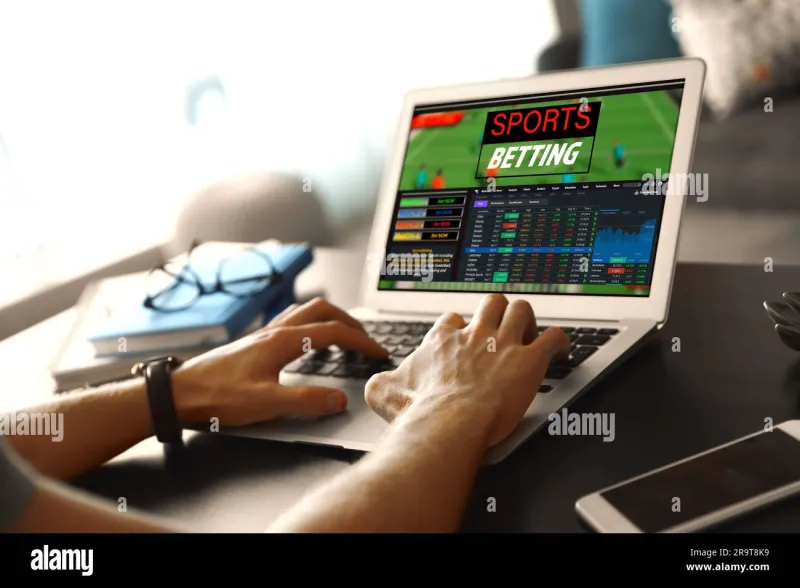
Wait Before You Wager: The Science of Slowing Down and Winning More
You've been there. Your team just got torched in the first quarter, and suddenly you're staring at a live line that looks too good to pass up. Or maybe you just watched a highlight reel that made some random Tuesday night prop bet feel like a sure thing. You tap, you submit, you regret.
That's impulse betting — and it's costing US bettors serious money every single week.
At 98Abet, we want you playing smart, not just playing fast. So let's talk about what actually separates disciplined bettors from the ones who blow through their bankroll before the third quarter.
Why Your Brain Is Working Against You
Here's the uncomfortable truth: your brain is not wired for rational decision-making under excitement. When you're watching a game and the momentum shifts, your brain floods with dopamine. That chemical rush doesn't care about point spreads, juice, or expected value — it just wants action.
Behavioral economists call this hot cognition, and it's been studied extensively. Research from institutions like the University of Nevada's Center for Gambling Studies consistently shows that bets placed in emotionally elevated states — right after a big win, a heartbreaking loss, or a dramatic in-game swing — carry significantly worse outcomes than pre-planned wagers. We're talking about measurably lower ROI across large sample sizes.
The fix isn't complicated. It's a waiting period.
What the Waiting Period Actually Does
Think of a waiting period as a circuit breaker between your gut and your wallet. When you force yourself to sit on a bet for even 90 seconds before confirming it, something interesting happens: the emotional intensity drops, your analytical brain re-engages, and you start asking better questions.
Is this line actually sharp, or does it just feel sharp right now? Does this bet fit my pre-game research? Am I chasing a loss from an hour ago?
Those questions don't get asked when you're tapping the confirm button on pure adrenaline. The waiting period is what creates the space for them.
Some serious recreational bettors call this their "cooling window." Pro-level handicappers build it into their entire workflow. And you don't need a complicated system to do it — you just need a few practical tools.
Practical Tools to Build Friction Into Your Process
Use Your Bet Slip as a Thinking Room
Most sportsbook apps — including the interface here at 98Abet — let you load up a bet slip without immediately confirming the wager. Use that feature intentionally. Add your selection, close the app, set a timer on your phone for 90 to 120 seconds, and go do something else. Grab some water. Check the injury report one more time. Look at the line movement history.
When the timer goes off, revisit the slip with fresh eyes. You'll be surprised how often a bet that felt urgent two minutes ago suddenly looks a lot less compelling.
Customize Your Notification Settings
Live betting notifications are designed to create urgency — that's just the reality of how mobile apps work. "Line just moved — act now" is engineered to trigger exactly the kind of impulsive response you're trying to avoid.
Dig into your app's notification settings and turn off or delay push alerts for live lines. This one change alone can dramatically reduce the number of emotionally-driven bets you place during games. You're not missing out on value — you're filtering out noise.
Write It Down Before You Place It
This sounds old-school, but keeping even a simple notes app log of your intended bets — before you place them — introduces a layer of accountability that's genuinely powerful. When you have to type out why you're making a bet, the weak reasoning becomes obvious fast. "Because it feels right" doesn't look great in writing. "Because the line opened at -3 and has moved to -1.5 despite 70% public action on the favorite" looks a lot more defensible.
Bettors who track their reasoning alongside their results also build better pattern recognition over time. You start to see which types of impulse bets you're most prone to — and that self-awareness is worth real money.
The Numbers Back This Up
A widely cited study from the Journal of Gambling Studies found that bettors who used self-imposed delays and pre-commitment strategies — essentially, deciding in advance what they would and wouldn't bet — showed statistically significant improvement in their win rates over time compared to bettors with no structured process.
In sports betting terms, even a modest improvement in your decision quality compounds quickly. If impulsive bets are losing at a rate of 55-60% (a reasonable estimate for emotionally-driven wagers), and disciplined pre-planned bets lose at 52-53% (closer to the house edge baseline), that difference represents a massive swing in your long-term bankroll health.
Building the Habit at 98Abet
We're not here to tell you betting should be joyless. Half the fun is the rush. But at 98Abet, we genuinely believe that smarter bettors are better customers — and better customers stick around longer, build bigger bankrolls, and enjoy the experience more.
So here's a simple challenge: for the next two weeks, commit to a 98-second minimum wait on every single bet you place. Not two hours, not a whole day — just 98 seconds of intentional pause. Log how many bets you talk yourself out of during that window.
We'd bet you'll be surprised by the number. And more importantly, you'll notice what happens to your results when you stop letting the moment make your decisions for you.
Bet bold. But bet deliberate.